BPC-157: Side Effects, Dosage and Evidence
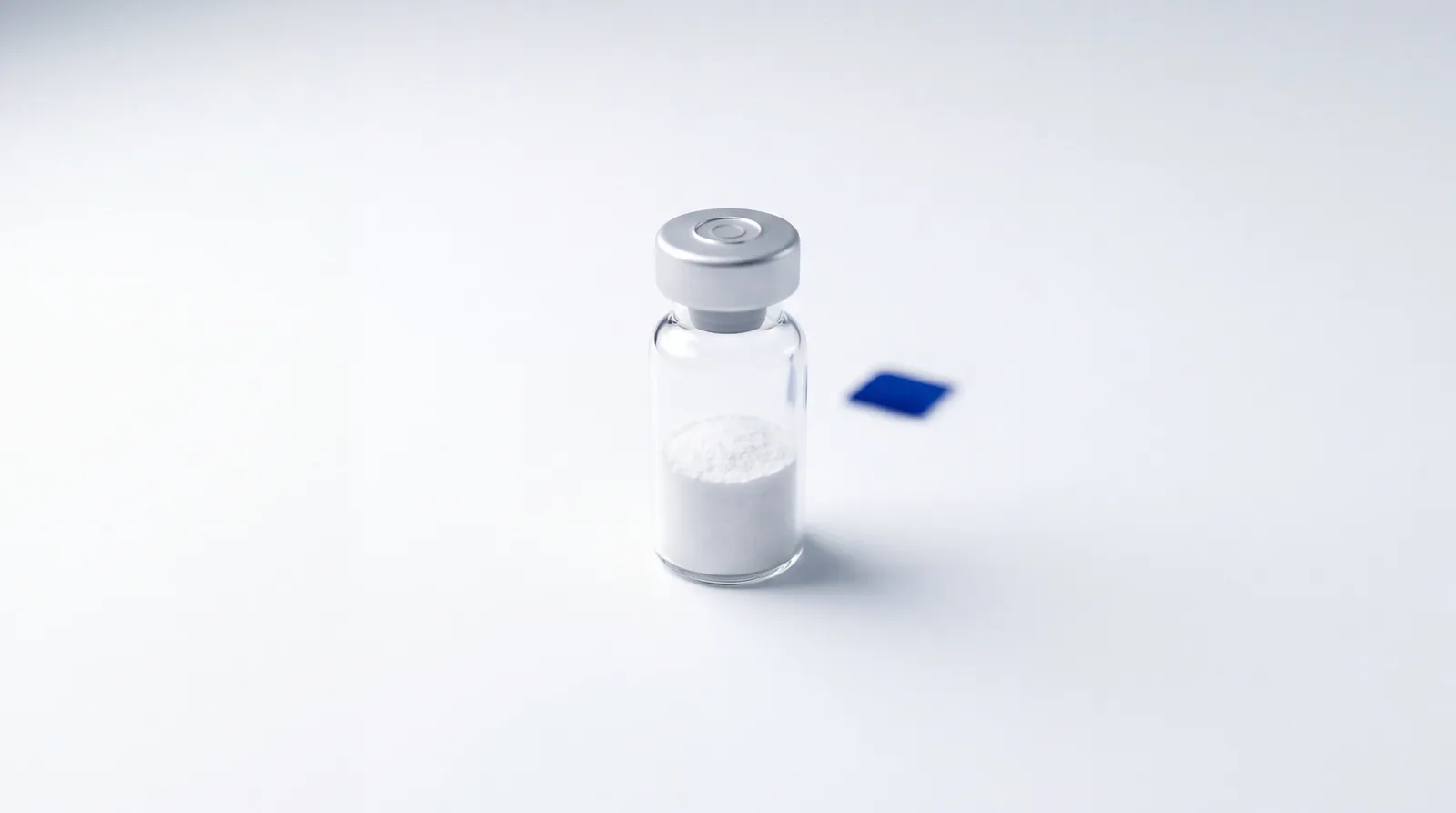
BPC-157 is a 15-amino-acid sequence derived from a protein found in human gastric juice — which is the origin of the name, Body Protection Compound. It has more published animal research behind it than almost any other peptide sold for research use, and essentially no controlled human research. Both halves of that sentence matter.
Side effects: what is actually known
Because no controlled human trial has been completed, there is no adverse-event table to cite. What exists is animal toxicology and user reports, and they point in the same general direction.
In animal studies BPC-157 has a striking safety record: researchers repeatedly report no observable toxicity across a wide dose range, including doses far above those used for efficacy, and no LD50 was established in the studies that looked for one. That is unusual and it is the reason the compound has the reputation it does.
Reported effects in practice are mild and mostly local:
- Injection-site redness, itching or swelling — the most common complaint.
- Mild nausea or appetite change — particularly with oral use.
- Headache and lethargy — reported early in a protocol.
- Transient dizziness — occasional, shortly after administration.
How BPC-157 works
Several mechanisms appear in the literature. It upregulates VEGFR2 signalling, driving angiogenesis; it interacts with the nitric oxide system, which affects blood flow and cytoprotection; it increases growth hormone receptor expression in tendon fibroblasts, which is the proposed explanation for the tendon findings; and it modulates the inflammatory response rather than simply suppressing it.
It is also unusually stable in gastric acid for a peptide — the property that makes oral administration viable for gut-directed research, where most peptides would be destroyed before absorption.
What the research covers
Gastrointestinal healing — the strongest evidence
This is where BPC-157 originated and where the data is deepest. Rat studies show accelerated healing of gastric ulcers, protection against NSAID-induced damage, improvement in colitis models, and healing of fistulas. Given the compound came from gastric juice, this coherence between origin and effect is one of the more convincing parts of its story.
Tendon, ligament and muscle
Rat studies report accelerated healing of transected Achilles tendon, medial collateral ligament and muscle injuries, with improved biomechanical strength in healed tissue. This is the use case that drives sales — and it rests entirely on rodent data.
Nerve and bone
Animal work covers peripheral nerve regeneration after transection and improved bone healing in segmental defect models. Early-stage and preclinical.
Dosing, in brief
| Route | Common amount | Frequency | Typical use |
|---|---|---|---|
| Subcutaneous | 250–500 mcg | 1–2× daily | Systemic, tendon, muscle |
| Oral (capsule or liquid) | 250–500 mcg | 1–2× daily | Gut-directed |
Protocols usually run four to eight weeks. There is no human dose-finding study behind these numbers; they are what circulates in practice, scaled loosely from animal work — and that scaling step is the one regulators do not accept.
Full detail is on the dedicated page:BPC-157 dosage covers syringe-unit conversions for every vial and water combination, where the 250–500 mcg figure actually came from, oral versus injectable, injection-site placement, and what remains unknown.
Regulatory status
BPC-157 is not FDA approved for any human indication, and that has not changed. What has changed is its compounding status, and the timeline matters because a lot of writing on this subject is stuck at the 2023 snapshot.
- September 2023 — FDA placed BPC-157 in Category 2 of its bulk drug substances list, effectively closing the compounding-pharmacy route that had been a significant supply channel.
- July 2026 — BPC-157 appeared on the agenda of the Pharmacy Compounding Advisory Committee, alongside KPV and TB-500. The committee voted; see the update below.
- Currently — BPC-157 no longer sits in the active Category 2 table. It appears on a separate FDA list of substances nominated but withdrawn: the nomination for compounding use was withdrawn by the party who submitted it.
Update · July 2026
An advisory committee voted in favor of compounding — which is not the same as approval
On July 23, 2026, FDA's Pharmacy Compounding Advisory Committee voted 8 to 6in favor of adding BPC-157 to the 503A bulk drug substances list, the list governing what compounding pharmacies may legally prepare. KPV passed by the same margin and TB-500 also 8–6, with MOTS-c, Semax and Epitalon clearing on the second day. FDA's own staff scientists had told the committee that quality data on safety and effectiveness were lacking, and the committee voted the other way.
What changed legally on that day: nothing. The vote is advisory and non-binding. FDA makes the final decision through formal rulemaking, a process measured in many months to years rather than weeks. Until a rule issues, BPC-157 remains ineligible for 503A compounding and remains unapproved for human use. Committee members who voted no named the risk directly: a compounding pathway can create the impression that a substance has been evaluated with the rigor of an approved drug when it has not.
What it would change if FDA follows the recommendation. A legal compounding route would mean pharmacist-prepared material with pharmacy-grade quality controls, a prescriber involved, and a traceable supply chain — a real improvement over anonymous research-chemical sourcing. Much community discussion has focused on price, with widespread expectation that pharmacy-prepared material would cost several times current gray-market prices. That is a reasonable inference from how compounding is priced, but no pricing has been published, so it belongs in the category of anticipation rather than fact.
None of this changes the evidence base. BPC-157 still has no completed controlled human trial. A regulatory pathway is not a clinical result.
BPC-157 remains available as a research chemical, and it remains prohibited by WADA at all times under S0, the non-approved substances class — where the 2026 List names it explicitly rather than catching it by implication. Note that S0 substances are classified asSpecified Substances, which differs from TB-500's placement in S2.3 as a non-Specified Substance; the distinction affects how sanctions are handled.
BPC-157 — 5 mg / 10 mg — American Peptides
Available as vials, capsules and TB-500 blends. Given the microgram dosing, batch purity documentation matters — HPLC and mass-spec COA provided per batch.
We may earn a commission if you buy through this link (at no extra cost to you). Sold for research purposes only.
Frequently asked questions
What are the side effects of BPC-157?
No controlled human trial has catalogd them. Animal studies across a wide dose range report a notably clean toxicity profile, and user reports describe injection-site irritation, mild nausea, headache and occasional lethargy. The unresolved theoretical concern is angiogenesis: a compound that promotes blood vessel growth is not neutral in the presence of an undiagnosed tumor.
What is BPC-157 used for in research?
The largest body of work is gastrointestinal — ulcer healing, inflammatory bowel models, and protection against NSAID-induced gut damage. Beyond that, animal studies cover tendon and ligament healing, muscle injury, bone repair and nerve regeneration.
What BPC-157 dose is used in protocols?
Community protocols commonly reference 250–500 mcg once or twice daily for four to eight weeks. Animal studies used microgram-per-kilogram quantities. No human dosing trial exists, so these are practice-derived numbers rather than trial-derived.
Is oral or injectable BPC-157 better?
It depends on the target. BPC-157 is unusually stable in gastric acid, which is why oral administration is used for gut-focused research and appears in the rat studies on intestinal healing. For tendon, muscle or systemic targets, subcutaneous injection is the route used in most animal work.
Is BPC-157 legal?
It is sold in the United States as a research chemical and is not FDA approved for human use. FDA placed it in Category 2 of its bulk drug substances list in September 2023, restricting compounding use. It no longer appears in the active Category 2 table but sits on a separate list of substances nominated but withdrawn — the nomination was pulled, which is not the same as FDA clearing it, and it remains ineligible for 503A compounding. It is also prohibited by WADA under S0. Legal status varies by country.
Research on BPC-157
12 records in our research database, classified by evidence type:
- MixedSafety and Efficacy of Approved and Unapproved Peptide Therapies for Musculoskeletal Injuries and Athletic PerformanceMendias CL et al. · Sports Medicine, 2026
- MixedInjectable Peptide Therapy: A Primer for Orthopaedic and Sports Medicine PhysiciansMayfield CK et al. · American Journal of Sports Medicine, 2026
- HumanIntra-Articular Injection of BPC 157 for Multiple Types of Knee PainLee E, Padgett B · Alternative Therapies in Health and Medicine, 2021
- AnimalTherapeutic potential of pro-angiogenic BPC157 is associated with VEGFR2 activation and up-regulationHsieh MJ et al. · Journal of Molecular Medicine, 2017
Sources
- Sikiric P et al. Stable gastric pentadecapeptide BPC 157: novel therapy in gastrointestinal tract. Current Pharmaceutical Design, 2011;17(16):1612–32. PubMed
- Chang CH et al. The promoting effect of pentadecapeptide BPC 157 on tendon healing involves tendon outgrowth, cell survival and cell migration. Journal of Applied Physiology, 2011;110(3):774–80. PubMed
- Hsieh MJ et al. Therapeutic potential of pro-angiogenic BPC157 is associated with VEGFR2 activation and up-regulation. Journal of Molecular Medicine, 2017;95(3):323–333. PubMed
- Sikiric P et al. Brain-gut axis and pentadecapeptide BPC 157: theoretical and practical implications. Current Neuropharmacology, 2016;14(8):857–865. PubMed
- FDA. Certain Bulk Drug Substances for Use in Compounding That May Present Significant Safety Risks — BPC-157 appears under “bulk drug substances nominated but withdrawn,” not in the active Category 2 table. FDA
- World Anti-Doping Agency. Prohibited List 2026, section S0 — names BPC-157 explicitly among non-approved substances. WADA Prohibited List
- FDA Pharmacy Compounding Advisory Committee, meeting of July 23–24, 2026 — agenda covers BPC-157, KPV and TB-500 bulk drug substances. Meeting page · Briefing document (PDF)
Related guides
- TB-500: benefits, dosage and evidence
- BPC-157 + TB-500 blend: dosing the stack
- Peptide reconstitution calculator
- Are peptides safe? Side effects by class